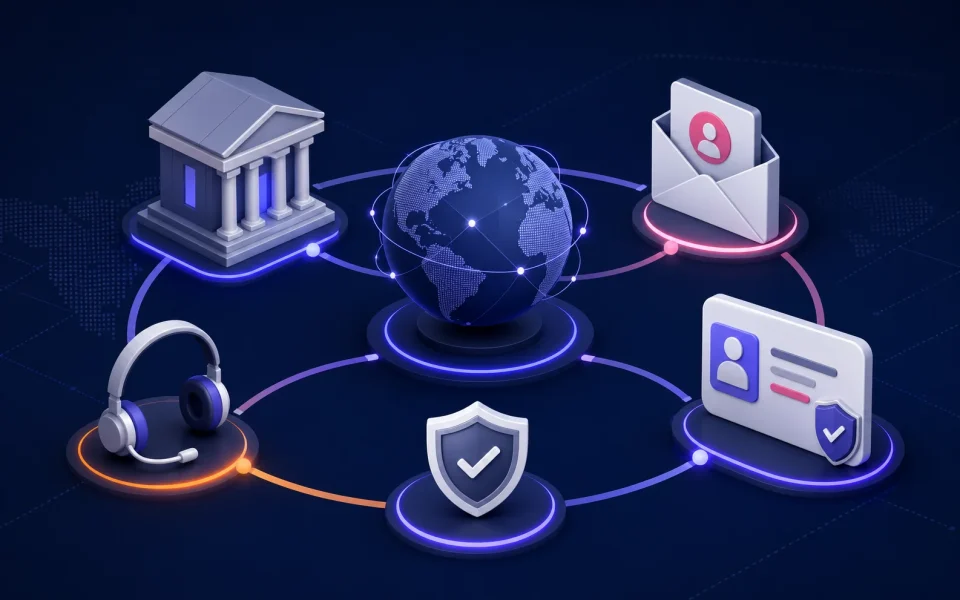
Short answer: Business email recovery is resilient when an authorized person can reach an independent recovery identity, device, provider process, and domain control path even if the primary mailbox and sign-in system are unavailable.
Why this control question matters
Email is both a business service and the recovery path for many other services. That creates circular dependencies: recover the domain through email, recover email through the identity provider, and recover the identity provider through the same domain.
Mapping the chain reveals where a second administrator is not actually independent. Corrective controls should be governed and tested, not created as undocumented personal backdoors.
Warning signs to investigate
- Every administrator uses the same identity tenant and recovery domain.
- The only recovery phone belongs to one person.
- Domain recovery depends on the unavailable mailbox.
- Emergency access accounts are undocumented or never tested.
- Provider support evidence lives only inside the affected service.
A practical review process
- Draw the recovery path for email, identity, domain, devices, and support.
- Mark every shared contact method, administrator, device, and domain.
- Create appropriately governed independent recovery routes and emergency roles.
- Test access and evidence in a tabletop exercise without resetting live accounts.
- Review when administrators, phone numbers, domains, or identity settings change.
Questions to take into the review
What remains reachable if both the primary mailbox and phone are unavailable?
Record the current answer, the evidence that supports it, the person responsible for any follow-up, and the date it should be reviewed again. Separate confirmed facts from assumptions so the next operator can understand the decision.
Can a backup meet provider identity requirements without the primary administrator?
Record the current answer, the evidence that supports it, the person responsible for any follow-up, and the date it should be reviewed again. Separate confirmed facts from assumptions so the next operator can understand the decision.
Are emergency controls monitored and reviewed after use?
Record the current answer, the evidence that supports it, the person responsible for any follow-up, and the date it should be reviewed again. Separate confirmed facts from assumptions so the next operator can understand the decision.
What a useful record should contain
Keep the asset name, business purpose, authorized owner, current administrators, recovery methods, dependencies, provider-specific limitations, evidence, open exceptions, and last review date together. Do not paste passwords, recovery codes, private keys, or unnecessary personal data into the record.
Next step
Choose one high-impact asset and complete the review before expanding the process. A small verified record is more useful than a large inventory built from assumptions.